 Skip to content



My husband and I love Wisconsin supper clubs.
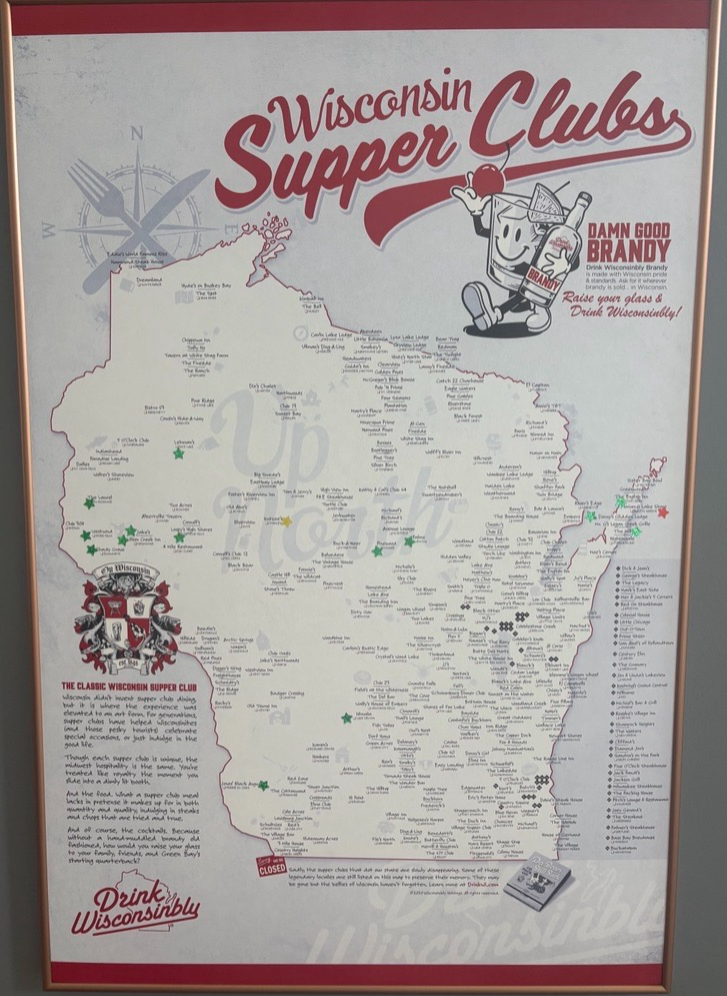
We have a giant poster hanging in our living room with every supper club in Wisconsin. Every time we visit one, we put a star on it like a couple of college kids trying to complete a bucket list.
Our friends from Texas come up every year and one thing on their list is hitting a supper club with us.
There is something special about walking into a place that hasn't tried to become something it isn't. The wood paneling. The old bar. The cocktails. The stories. The people who have been coming there for decades. It feels authentic, and that's becoming harder and harder to find.
Last weekend, we visited a supper club that has been serving guests since 1929. It has changed hands six different times over the years. You still need a reservation because the place is packed. The food was spectacular. The service was outstanding. Every employee genuinely seemed to care that you were there.
After dinner, I spent some time talking with the owner. She shared that she's ready to retire. What frustrated her was hearing potential buyers criticize the value of the business because she hadn't remodeled or modernized the building.
I couldn't help but laugh.
That's the point.
People aren't driving hours to experience the newest flooring, trendy lighting, or the latest restaurant concept. They're coming for the charm. They're coming for the history. They're coming for the experience that can't be recreated.
What surprised me even more was that you have to ask about the history. Most people talk about the famous supper clubs in Wisconsin. This one quietly lets its legacy speak for itself. Once you start asking questions, the stories begin to unfold, and that's what makes the experience unforgettable.
That conversation reminded me of manufacturers.
Some companies spend so much time chasing the newest thing that they forget what made customers fall in love with them in the first place.
New technology matters. Modern equipment matters. Continuous improvement matters. None of those things should come at the expense of your identity.
The best manufacturers I've met know exactly who they are. They embrace innovation where it creates value while protecting the culture, craftsmanship, relationships, and reputation that took decades to build.
Every business eventually changes hands. The goal shouldn't be to erase the past. The goal should be to build on it.
Legacy isn't something to apologize for.
It's one of your greatest competitive advantages.